
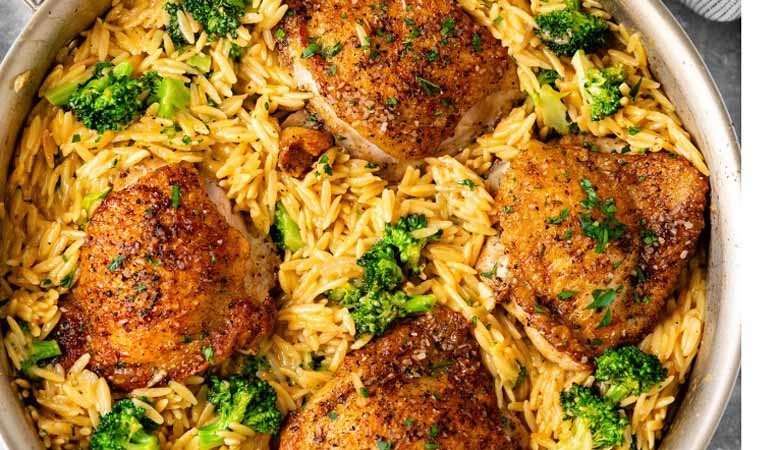
Serves four. Estimated time: about 35 to 45 minutes.
Ingredients for four
- 500g boneless, skinless chicken breast or thigh, cut into roughly 2cm pieces
- 250g dried orzo
- 300g broccoli, cut into small florets; finely slice the peeled tender stalk if using
- 1 small onion, finely chopped
- 2 garlic cloves, finely chopped
- 1 tablespoon olive oil
- 750ml chicken or vegetable stock, plus extra hot water or stock if needed
- 40g grated Parmesan, optional
- Half a lemon, for juice to taste
- Black pepper; salt only after checking the stock and finished dish
Use a deep, wide pan with a lid. Have a clean food thermometer, spoon and plate ready. Stock salt levels vary, and Parmesan adds salt too, so season at the end rather than copying a fixed salt quantity.
How to cook it
- Prepare the ingredients. Cut the broccoli into small, similar-sized florets. Measure the orzo and stock before starting. Keep raw chicken and its utensils separate from ready-to-eat ingredients.
- Brown the chicken. Heat the oil over medium-high heat. Add the chicken in a single layer, cooking in batches if needed, and turn until the outside has colour. Transfer it to a clean plate; browning is not proof that the middle is cooked.
- Soften the onion. Lower the heat to medium. Add the onion to the pan and cook, stirring, until softened. Add a splash of water if the pan looks too dry. Add the garlic and stir briefly without letting it burn.
- Add pasta and liquid. Stir in the orzo, then the 750ml stock. Scrape any browned cooking residue from the bottom. Return the chicken and juices from its plate. Bring to a gentle simmer.
- Cook gently. Part-cover with the lid and simmer, stirring regularly to stop the orzo catching. Use the pasta packet’s cooking time as a starting point; cooking in stock can differ from boiling in a full pan of water.
- Add the broccoli. Add the small florets when the orzo has started softening but still needs several minutes. Continue cooking until the pasta and broccoli reach the texture you want. Add small amounts of hot water or stock if the liquid runs low before the pasta is tender.
- Check the chicken. Test the thickest pieces with a clean thermometer. They need to reach 165°F/74°C. If necessary, continue cooking and keep enough liquid in the pan for the orzo.
- Finish and serve. Take the pan off the heat. Stir in the optional Parmesan and a little lemon juice, then taste before adding more seasoning. Loosen with a splash of hot water if it thickens while standing.
The temperature check follows FoodSafety.gov’s poultry guidance. A cooking time or a browned surface cannot substitute for checking that the chicken is safely cooked.
Troubleshooting the pan
| Problem | What to try |
|---|---|
| Pasta is firm and the pan is dry | Add a little hot liquid, stir and continue gently. Check more often as the pasta softens. |
| Orzo sticks on the bottom | Reduce the heat and stir more regularly. If it has burnt, do not scrape the burnt layer through the meal. |
| The dish looks soupy but the pasta is cooked | Simmer briefly uncovered while watching it; orzo also thickens as it stands. |
| Broccoli is still too firm | Keep cooking gently with enough liquid. Use smaller florets next time or briefly cook them separately. |
| Chicken needs longer | Keep cooking the whole pan until the chicken reaches its safe temperature, adding liquid if needed. The orzo may soften further; safely cooked chicken takes priority. |
Keep an eye on the liquid as the orzo cooks. Width, heat and how tightly the lid fits affect evaporation. Keeping extra hot liquid nearby makes adjustment easier than discovering the pan is dry halfway through.
Ingredient changes
Without dairy: omit Parmesan and check the stock ingredients. Lemon and pepper can finish the dish without cheese.
With frozen broccoli: follow its packet instructions and allow for the water it releases. Add it in time to cook fully, rather than relying on the exact timing for fresh florets.
Without chicken: use drained canned chickpeas and vegetable stock. Add the chickpeas with enough time to heat through, and check every ingredient, including the stock and optional Parmesan, if you want a vegetarian meal.
With gluten-free pasta: orzo is normally wheat pasta. A substitute can absorb liquid differently, so follow its packet and add liquid gradually as needed.
Leftovers and reheating
Follow FSA leftover guidance: cool in smaller portions, refrigerate within two hours and eat within 48 hours or freeze. Reheat only once until hot throughout, stirring for even heating. Add a little water when reheating if needed.
Keep a separate chilled portion if you want lunch tomorrow. Our tiffin guide explains cold transport, while the weekly meal planner helps you decide which meals need cooking fresh later in the week.
Other weeknight options
If you do not have orzo, choose a meal written for the ingredients you do have. Our five easy dinner ideas includes pasta, tofu stir-fry and bean tacos. The kitchen tools guide helps you choose a suitable pan without buying unnecessary equipment.
A LITTLE MORE FROM NANCY
Nancy
Find something good to cook, get a small garden started or pick up a useful idea for your home.
Meet Nancy

