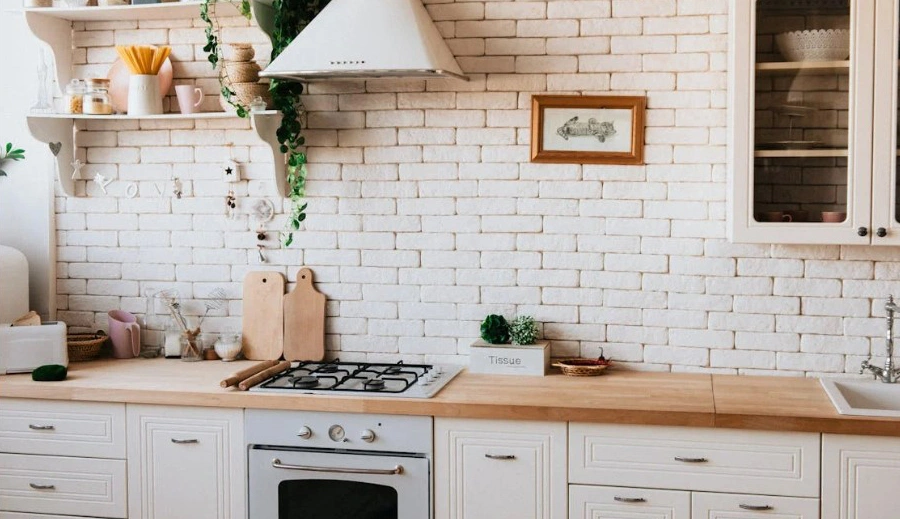
Start with the drawer that interrupts cooking most often. You do not need to empty the whole kitchen onto the counter. Finish that one drawer, use it for a few meals, then apply what worked to the next.
Measure before buying dividers
Record the usable internal width, front-to-back depth and height. Include anything that reduces clearance when the drawer closes. Measure long tools as well: a rolling pin that lies neatly in an open drawer may still catch the cabinet above it.
Check how far the drawer opens and which part is easy to reach. Reserve that reachable area for tools used most often. A beautiful insert at the back is a poor home for the peeler you need every evening.
Look up the drawer or cabinet's load guidance before filling it with heavy cookware. An arrangement that fits by volume can still be unsuitable by weight. Follow the hardware's instructions instead of guessing a load from how solid the front looks.
Sort by the kitchen job
Separate tools for preparing, cooking and serving. Keep a duplicate if it has a real role, such as a second spatula used at the same time; move unused duplicates out of the prime drawer. Check that items are clean, dry and fit for their intended use before returning them.
Our meal-prep tools guide helps you choose equipment around recurring jobs. Organization comes after that choice. There is little benefit in buying a fitted compartment for an appliance attachment you never use.
Put sharp items aside safely while working. Do not leave loose blades under a heap of utensils on the counter. For permanent storage, use a suitable protective system that lets you reach the handle without searching among exposed cutting edges, following the knife and storage manufacturer's instructions.
A three-drawer plan to adapt
Imagine a kitchen with two shallow drawers and one deeper drawer. The following arrangement is an example, not an assumption that every kitchen has the same layout.
| Drawer | Possible contents | Fit test |
|---|---|---|
| Shallow drawer near the preparation area | Peeler, measuring spoons and the utensils used before cooking | Each tool can be lifted by its handle without moving another |
| Shallow drawer near serving | Everyday cutlery and a small number of serving utensils | Long items lie clear of the closing mechanism |
| Deeper drawer | A limited set of food containers and their matching lids | Contents remain accessible and within the drawer's rated load |
Keep knives in a suitable dedicated insert, block or other approved storage system where the household can use it safely. The WÜSTHOF storage guide distinguishes purpose-made in-drawer knife trays and blade guards from loose drawer storage. Choose a system suited to your knives. Consider children's access when choosing the location.
If containers take the deeper drawer, match lids to bases first. Stack only combinations that separate easily, and keep the lids upright in a stable divider if that works with their shape. An orphan lid needs an identified matching container, not a whole new category of storage.
Deal with the awkward items individually
Long utensils
Try a long open compartment or a diagonal position where clearance allows it. Test with the actual utensil before buying a diagonal organizer. The drawer must close freely without pressing the item against the cabinet.
Spices and small parts
For spice jars, retain the name, ingredient information and useful dates. Choose a location that follows the product's storage instructions. An angled insert helps only if the jars fit and their labels remain readable; our spice guide covers choosing and using the spices themselves.
Keep small appliance parts with the equipment they belong to or clearly labelled by appliance. A bag of unidentified discs is difficult to use and easy to mistake for rubbish. Check the appliance manual before deciding which attachments are interchangeable.
The miscellaneous drawer
Define what this drawer is for: stationery and a few household odds and ends, for example. Move chemicals, medicines and small hazardous items to appropriate storage following their instructions. Choose storage that keeps those items out of harm's way.
Test during real cooking
Prepare an ordinary meal and notice which tools you reach for, which compartments catch and what will not go back easily. Rearrange the insert before adding another container. Leave enough space to remove and replace items without balancing them on top.
If packets and jars are spilling into your utensil drawers, solve that as a food-storage problem. Our small pantry guide gives those supplies a separate home. A useful tool drawer can then stay focused on the tools.
Keep exploring
- Small Pantry Organization: A Plan for Shelves, Food and Daily Use
- Meal Prep Kitchen Tools: What You Actually Need
- Cooking with Spices: Add Flavour One Change at a Time
Sources and further reading
A LITTLE MORE FROM NANCY
Nancy
Find something good to cook, get a small garden started or pick up a useful idea for your home.
Meet Nancy