Steamed broccoli makes an easy side when the rest of dinner is nearly ready. A covered pan does most of the work, and a quick check tells you when to lift the broccoli out. Get the florets and stems ready first, then set up the pan so the steam can cook them evenly.
Cut florets and stems into useful pieces
Rinse the broccoli under running water. Separate the head into florets of a similar size, splitting the larger ones through their stems. Trim the dry end from the main stalk and peel away any tough, woody outer layer. The tender inside can be sliced and cooked too.
Our broccoli-cutting guide walks through the cuts. Lay the prepared pieces on your board before loading the basket: one enormous floret among much smaller ones will make the final texture check awkward. Slice the peeled stem into pieces that are easy to eat alongside the florets.
Oregon State University’s Food Hero broccoli guide recommends similar-sized pieces and peeling heavy or woody stems. That little bit of preparation helps you use more of the head.
Keep the broccoli above the water
Choose a saucepan that fits your steamer basket and has a lid. Add water below the base of the basket, following the steamer’s instructions. Check the level before heating: the broccoli should sit above the water, with enough water underneath to keep producing steam.
Bring the water to a boil, then put the broccoli in the basket and cover the pan. Spread the pieces out as much as the basket allows. If the lid cannot sit properly because you have piled the broccoli too high, cook a smaller batch and keep the rest ready on the board.
Start with a short cook and check it
Purdue Extension’s broccoli guidance suggests about four minutes of covered steaming for smaller florets. Begin checking around then. Larger pieces and different pans can need longer, so use the time as a reminder to look, rather than a reason to leave the broccoli unattended.
Keep the pan producing steam without letting it boil dry. When you lift the lid to check, use an oven glove and open it away from your face and hands. Have a fork and a plate beside the hob so the lid only needs to be off briefly.
Look for green florets and a tender stem
Lift out a piece and push a fork into its stem. The stem should be tender enough to eat, with a little firmness if you like crisp-tender broccoli. The florets should remain bright green and hold their shape. If the centre still feels hard, replace the lid and check again shortly.
Food Hero explains that overcooking can turn broccoli olive green and give it a strong sulfur smell. Once the texture suits you, lift the basket out rather than leaving it over the hot water while you finish everything else.
No basket? Use a covered skillet
A skillet with a lid gives you another route. Illinois Extension’s garlic and Parmesan broccoli recipe cooks two pounds of washed florets with half a cup of water, oil, garlic and lemon peel. It covers the skillet and cooks for about five to six minutes, until crisp-tender.
Use that recipe’s quantities and steps if you want to try the skillet method. The small amount of water is part of that method; it is a different pan setup from suspending a basket above boiling water.
Finish it while dinner is ready
Move the cooked broccoli to a serving bowl. Try a little olive oil and lemon juice, butter and pepper, or grated Parmesan. Toss gently and taste before adding more seasoning. Keep the finish simple if the main dish already has a rich sauce.
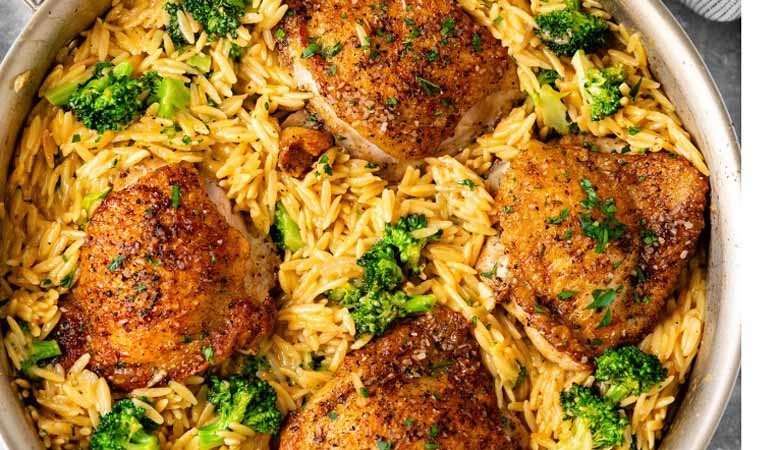
For broccoli cooked as part of a whole meal, try one-pan chicken, broccoli and orzo. If you are preparing a fresh head for the freezer, follow the separate broccoli-freezing guide, which explains the blanching step.
A LITTLE MORE FROM NANCY
Nancy
Find something good to cook, get a small garden started or pick up a useful idea for your home.
Meet Nancy