Prepare even florets
Iowa State’s cauliflower advice recommends a firm, heavy, unblemished head with fresh green leaves. This method uses fresh florets rather than a whole head or thick steaks.
Wash your hands, rinse the cauliflower under running water and use a clean board. FDA produce guidance advises against soap or detergent.
Remove the leaves and trim the base. Cut into the central stalk to release florets, then split large ones through their stems. Keep the pieces similar enough that you can compare their tenderness during cooking.
Let surface water drain and pat the pieces dry with a clean towel. Set the prepared cauliflower beside a mixing bowl, oil and a rimmed metal baking tray before turning your attention to the hot oven.
Coat lightly and spread out
Mississippi State’s roasted cauliflower method uses 425°F, about 220°C, with bite-size pieces and oil. Preheat the oven and lightly grease the tray.
Toss the florets in the bowl with enough oil to give a light coating, then add a little pepper and salt if wanted. Garlic powder or paprika is an optional seasoning; keep it modest if the main dish is strongly flavoured.
Spread the pieces in one layer, with cut faces against the tray where practical. Divide a crowded batch between trays. A deep pile makes it harder to turn pieces and judge what is happening underneath.
Start checking at 15 minutes
Mississippi State gives 15–20 minutes for its small pieces. Begin checking at 15 minutes, using oven gloves to handle the tray. Continue if the thick stems are still firm.
Turn a few pieces to inspect the undersides, and move them gently with a spatula if needed. Check the middle of the tray as well as its edges. Pieces do not need identical colour to be ready.
Keep checking at short intervals until the texture suits your meal. Larger pieces, a crowded tray and your particular oven can change the time. Use the timing as a reminder to inspect the food, not as a promise that every batch is finished.
Test a stem as well as the surface
Lift a thicker floret onto a plate and press a fork into its stem. It should yield while the floret still holds together. Let a piece cool enough to taste if you want to judge the bite directly.
Browned edges with a hard centre mean the batch needs attention before serving. Give larger pieces more time and remove smaller ones that are already ready. For the next tray, cut the florets more evenly rather than leaving one large piece among small ones.
Serve it while the edges are crisp
Move the cauliflower to a serving bowl once it is ready. Add lemon juice, chopped herbs or grated cheese if you like, then taste before adding more seasoning. Keep any ingredient restrictions in mind when choosing the finish.
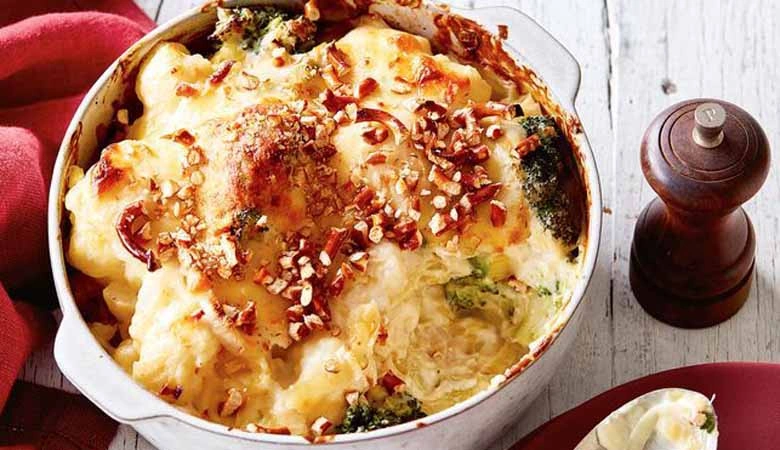
For a softer side with a separate sauce, use the steamed cauliflower method. The cauliflower and leek casserole starts with cooked vegetables and a cheese sauce; follow that recipe from the beginning.
Cool and store the remainder
Divide leftovers into shallow containers and refrigerate within two hours, or one hour above 90°F (32°C). FoodSafety.gov’s chilling guidance sets the fridge at 40°F (4°C) or below.
Expect stored cauliflower to soften. Save a portion for a suitable cooked meal and keep it visible in the fridge. For general handling, our leftover cooling guide gives the fuller routine.
A LITTLE MORE FROM NANCY
Nancy
Find something good to cook, get a small garden started or pick up a useful idea for your home.
Meet Nancy