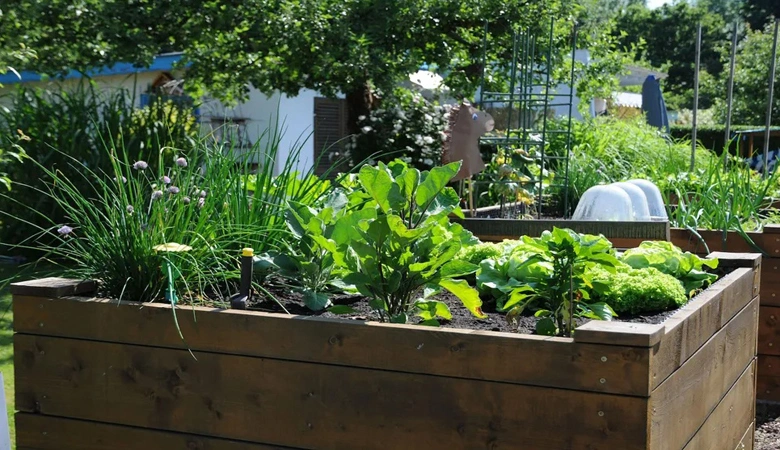
A container makes lettuce convenient to reach, but it does not remove the need for suitable weather and light. Choose the season for your location and the variety on the packet. Use sowing dates for your own climate, especially in hot summers or the southern hemisphere.
Choose leaves or whole heads
Loose-leaf types suit people who want to pick a few leaves for a sandwich or side salad. Hearting types suit people who want a complete lettuce at harvest, but each plant needs room to form its head. The RHS lettuce growing guide covers both and identifies compact varieties as an option where space is limited.
| Crop | Useful for | Plan for |
|---|---|---|
| Loose-leaf lettuce | Picking individual usable leaves | Room for each plant and replacement sowings |
| Hearting lettuce | Harvesting a formed head | Wider spacing and a smaller number of plants |
| Baby-leaf crop | Cutting a young crop | The packet's closer sowing and cutting instructions |
A dense baby-leaf sowing and a pot of mature heads are different growing plans. Do not sow thickly for baby leaves and then leave all those seedlings to compete for the space needed by full-sized plants.
Set up a container you can water and reach
RHS recommends a container at least 30 cm (about 12 inches) wide for sowing lettuce, with moist, peat-free multipurpose potting compost. Its planting guidance for young plants uses a large container at least 30 cm wide and deep. These are useful starting recommendations; final capacity still depends on the crop and variety.
Use a clean container with drainage holes and a growing mix intended for pots. Put it in position before filling if it will become too heavy to move. Keep any water draining from it from making the walking surface slippery.
Watch the spot through a day. In hot weather, some light shade can help; permanent deep shade is a different problem. Our guide to vegetables in a shaded bed helps you assess the light rather than relying on the word "shade-tolerant."
A first pot plan
Suppose you have a trough with a usable growing area 60 cm long and 30 cm wide. Choose one loose-leaf variety and check its final spacing. If its packet specifies 15 cm, a simple single row with centres at 7.5, 22.5, 37.5 and 52.5 cm fits four plants along the length.
A single row leaves a straightforward arrangement to inspect and harvest. If you want a different number of rows, check spacing in both directions and the plants' mature size. Filling every centimetre with seedlings usually creates a thinning job rather than a larger guaranteed harvest.
- Fill and moisten the mix according to its instructions.
- Sow at the depth and timing on the packet, or transplant suitable young plants after preparing them for outdoor conditions.
- Label the variety and date. Keep the packet so you can check thinning and harvest guidance.
- Thin to the chosen final spacing instead of keeping every seedling.
- Start a separate small replacement sowing when your season and available space allow it.
Our container gardening guide covers the wider setup. Here the goal is a manageable lettuce crop, not a whole collection of containers.
Check moisture and growth
Keep lettuce growing steadily by checking the potting mix and watering when needed. A hot, windy balcony may need more frequent checks than a sheltered patio. Do not make "every two days" the rule for both.
Follow the mix and fertiliser instructions rather than adding feed whenever a leaf looks disappointing. Check for crowding, moisture problems and pests first. Slugs, snails and aphids are among the problems listed by RHS; raising the pot does not guarantee they cannot reach it.
Harvest, then decide what happens next
For loose-leaf plants, pick usable outer leaves while leaving healthy growing material, following the variety's guidance. For whole heads, harvest when the head is ready. Treat the packet's maturity estimate as a guide: weather and growing conditions alter progress.
Hot, dry conditions can encourage bolting, and hot weather can also reduce germination. If plants become tall and start flowering, review variety and season instead of assuming extra fertiliser will restore tender leaves.
When a crop is finished, remove the remains, review the condition of the growing mix and prepare the next sowing only if the local season suits it. Note whether you used the harvest easily. Two smaller crops spread through the season may be more useful than a crowded pot that produces more leaves than you want in one week.
Keep exploring
- Container Gardening for Beginners: Plan Three Pots You Can Maintain
- Vegetables in a Shaded Raised Bed: Choose Light-Tolerant Crops
- Square Foot Gardening for Beginners: Plan, Space and Plant
Sources and further reading
A LITTLE MORE FROM NANCY
Nancy
Find something good to cook, get a small garden started or pick up a useful idea for your home.
Meet Nancy