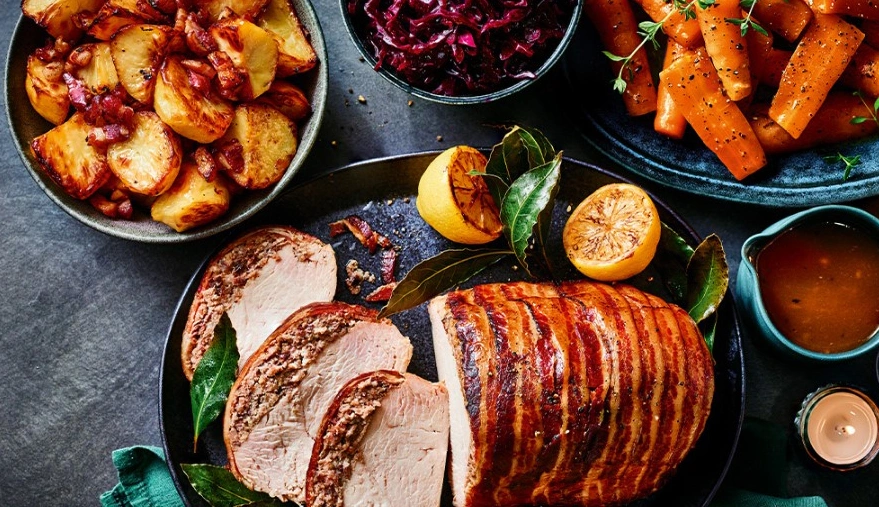
The ideas below are menu choices, not full cooking recipes. Use a complete method for anything cooked, and check the quantities against your guests and the length of the event.
Six options with a job on the table
Small sandwiches
Choose one familiar filling and one clearly suitable alternative for guests who need it. Cut sandwiches into portions people can pick up without losing the filling. Keep reserves chilled where the ingredients require it and put out a small plate at a time. A mountain made hours early is less useful than a replenishment plan.
Vegetables with hummus or another dip
Prepare vegetables in shapes appropriate for the people eating them. Serve a few portions beside the dip, with a clean utensil, or use individual cups if you have a sensible way to chill them. Check the dip's label: hummus often contains sesame, and a dish that looks plant-based is not automatically suitable for every allergy.
Cheese with fruit
Choose fruit that is easy to prepare and cheese you can serve in manageable portions. Keep labels for both. For very young children, use suitable preparation rather than copying an adult cheese-cube display. Soft or delicate foods may be easier to serve seated at a separate children's place.
Tortilla wedges
Decide whether you mean wedges of a filled flatbread or a Spanish-style egg-and-potato tortilla. They are different dishes. Choose a complete recipe, then work out how each portion will be picked up and whether it needs a plate. Put the serving temperature and holding plan alongside the recipe.
Meatballs
A small cooked meatball can give the menu a substantial hot option. Choose a method with clear cooking instructions, use consistent portion sizes and confirm a safe hot-holding arrangement if you will not serve immediately. Our chicken meatball guide has the ingredients and method.
A small baked sweet
Choose one recipe or bought item that can be portioned cleanly, such as a cake cut into small pieces. Keep the ingredient information available. A dry-looking cake may still have a filling that needs refrigeration, so use the actual recipe or packet's storage instructions.
Turn the menu into quantities
Ask whether the food is a snack beside dinner or the main meal. Consider the event length, guest ages and the size of the portions. There is no single pieces-per-person number that fits a sandwich, a small sweet and a meatball equally well.
For a planning example, suppose 12 guests each get two small sandwiches and one small sweet. That is 24 sandwich portions and 12 sweets before any other food. If your sandwich recipe makes eight of those portions, you need three batches. These are arithmetic examples, not a recommended amount of food for every guest.
Calculate each dish separately, using its actual yield. Then read the menu as a whole. If you need several batches of a hot item, check that your equipment and service plan can cope. A smaller menu is easier to adjust than twelve unrelated recipes.
Serve small batches and watch the clock
The FDA's home-buffet guidance says to keep hot food at 140°F/60°C or warmer and cold food at 40°F/about 4.4°C or colder. Check the food temperature and your warmer's capability; a warm-looking tray is not proof of safe holding.
Without temperature control, discard perishable food left at room temperature for more than two hours, or one hour above 90°F/about 32°C. Count time spent preparing and serving; moving a dish or adding fresh food does not restart its clock.
Keep reserves appropriately hot or refrigerated. Replace a near-empty serving dish with a fresh clean one instead of piling new food onto old. Give each dish its own serving utensil and make the food labels easy to read.
Check the people as well as the menu
Ask guests about dietary needs early enough to act on the answer. Keep bought-food labels and a written ingredient list for homemade dishes. If someone has a serious allergy, agree a suitable preparation and serving arrangement with them; a handwritten "free from" sign does not control cross-contact.
Young children need a separate food-preparation check. The Department for Education's guidance advises against whole nuts for under-fives, gives safer shapes for round foods and cheese, and calls for supervised seated eating. Avoid toothpicks and adult-sized bites for small children.
Put a clean-up time in the party plan and name who will deal with leftovers. For the broader event, see our engagement-party planning guide or Christmas dinner planner.
A LITTLE MORE FROM NANCY
Nancy
Find something good to cook, get a small garden started or pick up a useful idea for your home.
Meet Nancy