A loose tray pack lets you remove a little fruit at a time. A sweetened pack suits a different use and needs a label showing the added sugar. Choose before freezing so breakfast berries do not arrive unexpectedly sweetened.
Wash and hull sound ripe berries
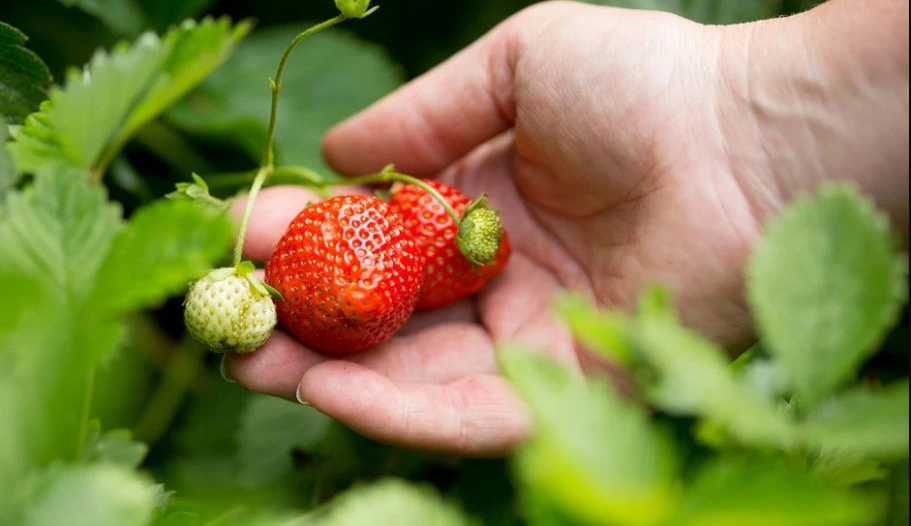
The National Center for Home Food Preservation recommends fully ripe, firm berries with a deep red colour, discarding immature or defective fruit. Wash the berries and remove the caps. Save only fruit in a condition you would otherwise use.
Use clean hands, a clean preparation surface and running water. Let the washed fruit drain. For a whole-berry pack, leave berries whole; slice if a smaller piece is more useful for the recipe you intend to make.
Freezing does not make a poor or spoiled berry better. It also does not preserve the firm structure of a fresh strawberry for every use. Set aside some fresh berries if the next day's dessert depends on that texture.
Freeze without sugar in a loose tray pack
NCHFP's strawberry page links to its dry and tray packing method for unsweetened fruit. Use that option when you want plain berries and easy portioning.
- Spread the prepared fruit in one layer on a shallow freezer tray.
- Put the tray in the freezer until the berries are firm.
- Promptly move them into freezer bags or suitable containers. NCHFP's dry-pack chart calls for 1/2-inch headspace in rigid containers. Seal securely and return to the freezer so exposed fruit does not sit drying out.
- Label "plain strawberries", the date and the packed amount.
The point is to separate the berries before they are packed, not to leave them uncovered in the freezer for storage. Once the pieces are frozen, finish the packaging.
If you prefer a single recipe-sized portion, measure that amount into its own pack. If you want flexible handfuls for different meals, keep the pieces loose and close the bag promptly after taking some out.
A published sugar pack is a separate choice
NCHFP's sugar-pack method uses 3/4 cup sugar per quart of strawberries, stated as about 1 1/3 pounds of fruit. Mix until most of the sugar dissolves, or let the mixture stand for 15 minutes, then pack with the required headspace, seal and freeze. It provides this method for whole berries and also for sliced or crushed fruit.
Follow the published quantity if you choose that method. Write the fruit amount and added sugar on the label, and account for the sugar when choosing the final recipe. Do not assume a sweetened pack and a plain bag are interchangeable.
NCHFP also provides a syrup-pack option. Follow its complete syrup and headspace directions rather than mixing an unspecified amount of sugar and water into a full container.
Thaw cold, or use frozen fruit in a suitable recipe
Thaw the portion in the refrigerator when you need thawed fruit. NCHFP's fruit-serving guidance suggests serving dessert fruit while a few ice crystals remain to make the softer texture less noticeable.
For a smoothie, use frozen pieces if the recipe and blender allow it. For baking, follow the recipe's frozen-fruit directions rather than deciding that every berry should be thawed and drained. Thawed fruit can release more juice, and that can change a batter or filling.
A cooked topping or another dish that already softens the fruit can be a more forgiving destination than a neat layer of fresh berries on a tart. These are meal ideas, not a new recipe or a report of a kitchen test.
Common packing questions
Must you add sugar? No. NCHFP provides a plain dry or tray pack. Sugar changes flavour and quality characteristics; it is not needed to make the frozen pack shelf-stable, and frozen fruit still belongs in the freezer.
What if the bag becomes one block? Pack separate meal amounts next time, or make sure the tray-frozen berries are firm before moving them. Do not thaw a large bag simply to remove a few berries.
Can they replace fresh berries in any dish? Not with identical results. Expect a softer berry and extra released juice. Choose a recipe that fits the form you have.
Keep the freezer at 0°F (-18°C) or below. NCHFP's broad quality guidance for properly prepared frozen fruit is eight to twelve months. Mark older packs and plan a use for them.
Give the berries a destination
Our small-batch chia jam has its own method and refrigeration requirements; read it before choosing your fruit portion. It is not a shelf-stable canning recipe. Add the planned fruit use to your week of meals.
Keep the pack and its planned use in your freezer inventory. Recording an amount and date helps you find it; the planner does not calculate whether food is safe.
Sources
The linked NCHFP strawberry, tray-pack and serving pages support the methods here. Its storage page supplies the broad quality period.
A LITTLE MORE FROM NANCY
Nancy
Find something good to cook, get a small garden started or pick up a useful idea for your home.
Meet Nancy