The bulky bag you start with becomes much more compact after blanching. Measure portions after preparation so the label describes what is actually inside the freezer container.
The two-minute blanch applies to spinach
The National Center for Home Food Preservation's greens method specifies two minutes of water blanching for spinach and most other greens. Collards have a separate three-minute time. Do not transfer that longer figure to spinach or treat every leafy vegetable as identical.
- Choose young, tender green leaves. Wash thoroughly and remove woody stems. Keep the clean leaves away from raw meat and dirty preparation surfaces.
- Have boiling water and a separate bowl of cold water ready. Work in small batches so the leaves heat evenly rather than packing a huge bag into one pan.
- Lower the spinach into boiling water and cover. Start the two-minute time when the water returns to the boil.
- Move the leaves into cold water immediately. Cool thoroughly, then drain well.
- Pack into freezer containers with 1/2-inch headspace, seal and freeze. Label the prepared amount and date.
The half-inch space is about 1.3 cm. Use a suitable freezer container rather than assuming any tub or jar will tolerate freezing. Blanching is a short preparation step before storage; the leaves still need whatever cooking the final dish calls for.
Measure a useful amount of prepared spinach
| What is in the pack? | Useful wording | Why it matters |
|---|---|---|
| Blanched, drained leaves | Spinach, blanched, drained weight and date | The amount is clear after the leaves have wilted. |
| A measured recipe quantity | Amount and intended recipe | You can remove one packet instead of the whole batch. |
| A small addition for a cooked meal | Prepared quantity, plus any further draining needed | You can plan it as one ingredient in dinner. |
A cup of loosely packed fresh leaves is not the same amount as a cup of cooked, compacted spinach. Record whether you measured before or after preparation. If your recipe gives a weight, using a scale avoids relying on how tightly a cup was packed.
Several small containers can suit a household that adds spinach to different meals. A single big block is practical only if you routinely use that whole amount together.
Partially thaw for more even cooking
Spinach is a useful exception to the usual cook-vegetables-from-frozen rule. NCHFP's serving advice says leafy greens cook more evenly when partially thawed first.
Partially thaw the required portion in the fridge so the leaves can loosen, then cook it for the planned dish. Separate the leaves as they heat. Keep the portion cold while waiting; do not leave the tub on the counter for the day.
Some recipes need thawed spinach squeezed or drained more thoroughly. Follow the actual recipe rather than adding a wet frozen block to a mixture that depends on a particular texture. Account for the water released during thawing and follow the recipe's advice on draining the spinach.
Choose a dish that welcomes cooked leaves
Soup, a cooked egg dish or a pasta filling can give prepared spinach a useful destination. Those are meal ideas, not complete new recipes. Follow the dish's method, ingredient quantities and food-safety directions.
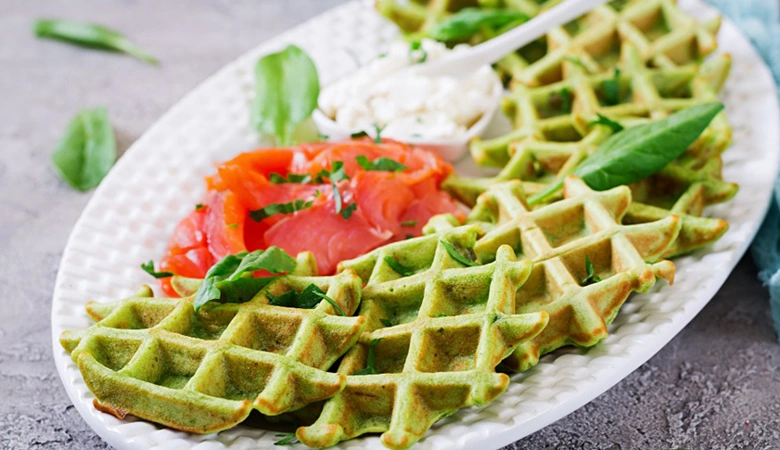
Our spinach and cheese waffles have their own preparation and measurement requirements. Read them before setting aside a portion; this freezing guide does not demonstrate that an arbitrary amount of frozen spinach will produce the same batter.
If you need spinach for a fresh salad, keep suitable fresh leaves for that meal. Freezing is a way to save an ingredient for cooking, rather than a way to keep every future use unchanged.
Raw leaves, bought frozen spinach and cooked leftovers
Raw leaves: this guide follows the published blanching method. A raw-leaf shortcut is a different approach and should not be presented as the same method with the same quality expectations.
Bought frozen spinach: follow the packet's cooking and thawing instructions. A commercial block may be chopped, compressed or prepared differently from your homemade portion.
Cooked leftovers: store the complete dish promptly using its leftover guidance. Blanching already cooked leaves again is not part of that process.
Keep the freezer at 0°F (-18°C) or below. NCHFP's broad quality guidance for properly prepared frozen vegetables is eight to twelve months. Put the oldest labelled portion into your dinner plan first.
Keep the pack and its planned use in your freezer inventory. Recording an amount and date helps you find it; the planner does not calculate whether food is safe.
Sources
A LITTLE MORE FROM NANCY
Nancy
Find something good to cook, get a small garden started or pick up a useful idea for your home.
Meet Nancy