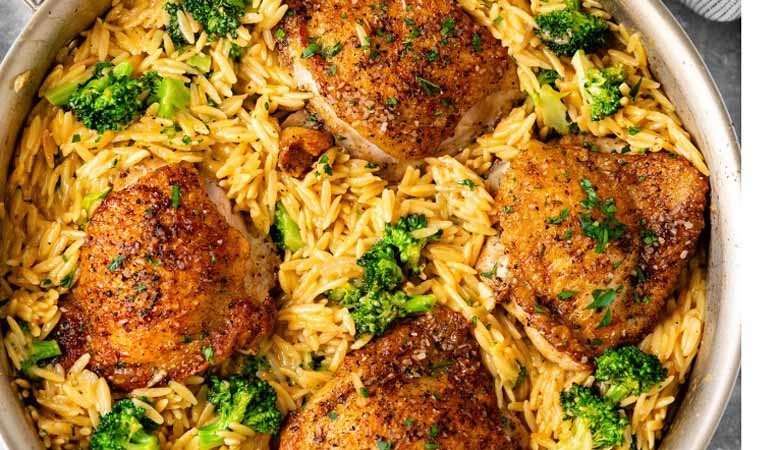
A large crown is not one uniformly sized piece. Split it into manageable florets before blanching so you can use the published timing, and save the frozen portions for cooked dishes.
Trim and split before the water boils
The National Center for Home Food Preservation recommends firm, young, tender stalks with compact heads. Remove leaves and woody portions, then separate the head into useful sections.
Its preparation includes a 30-minute brine soak to remove insects, using four teaspoons of salt in one US gallon of water. Wash and handle the broccoli cleanly afterwards; the salt water does not sterilise it.
Split lengthwise so the florets are no wider than 1 1/2 inches, about 3.8 cm. Do not apply the same short blanch to an unsplit crown. Put aside material that is spoiled; the freezer cannot improve its condition.
Boiling water and steam have different times
| Method | Time | When the timer starts |
|---|---|---|
| Water blanch | 3 minutes | When the water returns to the boil after the broccoli enters |
| Steam blanch | 5 minutes | When the lid goes on after adding broccoli to the steaming basket |
For water blanching, bring a generous pan of water to a vigorous boil and work in small batches. NCHFP specifies one US gallon per pound of vegetables. Cover after adding the broccoli; the water should return to the boil within one minute.
For steam blanching, use a tight-fitting lid and a basket above the boiling water, with the broccoli in a single layer so steam reaches the pieces. Keep the heat high. Follow NCHFP's full steaming setup rather than treating a crowded bowl above lukewarm water as the same method.
Choose the setup you can control. The five-minute steam time is not a reason to boil broccoli for five minutes, and the three-minute water time is not the steam time.
Have cold water ready before blanching finishes
- Transfer the broccoli immediately to a large quantity of cold water after the timed blanch.
- Cool thoroughly for about as long as the blanch took. Keep the water cold, using ice or replacing water as necessary.
- Drain well. Excess surface water becomes extra ice in the package and can reduce quality.
- Pack in freezer containers with no headspace, as the broccoli method specifies. Seal securely.
- Label the amount, date and "blanched broccoli", then freeze promptly.
No headspace is the published packing instruction for this drained vegetable. It is not a rule for a tub of soup or a liquid-filled glass jar. Follow the container's own freezer instructions and use the appropriate packing method for other foods.
Put one useful quantity in each pack
Pack the amount you normally cook as a side, or the broccoli quantity needed for a familiar recipe. A large bag might be useful for several dinners if pieces remain accessible; a solid frozen block is easier to manage when it is already one meal's amount.
For example, check the broccoli quantity in our chicken broccoli orzo before allocating a packet. Follow its cooking directions and ensure the broccoli is properly heated for the dish.
NCHFP's serving guide says most frozen vegetables should be cooked without thawing. Frozen broccoli will not have exactly the same raw texture as a freshly cut floret. Keep fresh broccoli for a raw platter if that crunch is what you need.
What if the broccoli is already cooked?
Fully cooked broccoli from dinner is a leftover, not an unblanched raw vegetable. Cool and refrigerate or freeze it promptly under the complete meal's handling instructions. Blanching it again is not necessary and is likely to make it softer.
If the last batch was too soft, first review the starting floret size, heating method, timer start and cooling. Do not shorten the published blanch at random to compensate for a later cooking step.
Keep frozen portions at 0°F (-18°C) or below. NCHFP's broad quality range for properly prepared frozen vegetables is eight to twelve months. Label and rotate packs, then put the older broccoli into your meal plan.
Keep the pack and its planned use in your freezer inventory. Recording an amount and date helps you find it; the planner does not calculate whether food is safe.
Sources
A LITTLE MORE FROM NANCY
Nancy
Find something good to cook, get a small garden started or pick up a useful idea for your home.
Meet Nancy