
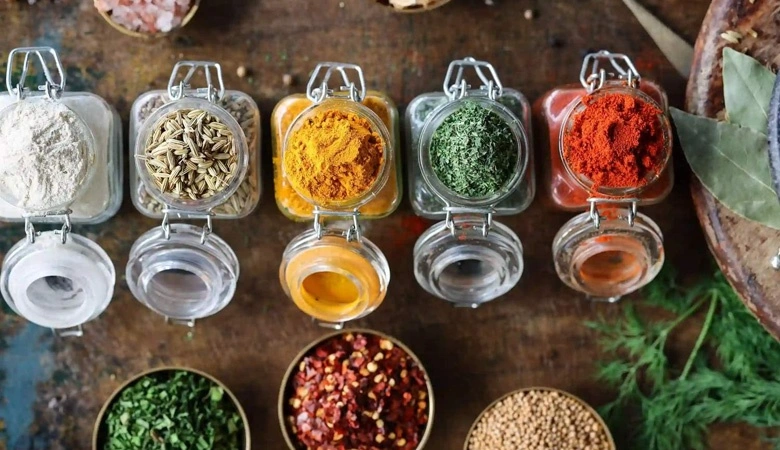
Cumin with beans, paprika with potatoes and cinnamon in a suitable bake are possible starting points. They are suggestions for a kitchen experiment, not shortcuts to making an authentic version of every dish that uses those spices.
Give one jar a reason to be there
Choose a complete recipe that uses a spice you want to learn. Check whether it asks for whole seeds, a ground powder or a blend. Those forms can need different preparation, and the same spoonful of each is not automatically interchangeable.
Buy a modest quantity if this is your first use. A jar you finish is more useful than a bulk bag that loses flavour before you know what to do with it. Read the ingredients on blends: a product called seasoning can include salt, sugar or allergens as well as spices.
If a recipe asks for smoked paprika, ordinary paprika changes the intended flavour. If it asks for whole cumin seeds, ground cumin changes how the spice can be handled. Follow the named ingredient for the first attempt, then choose a deliberate variation later.
When should the spice go in?
Use the recipe's order. Whole seeds may be toasted or heated in fat; ground spices may go into oil, a sauce, a marinade or a batter. The method decides which is appropriate. You do not need to fry every spice simply because you have seen someone do it for a different dish.
Keep the measured spice ready before starting a step that moves quickly. Ground powders can catch on a hot pan, so avoid leaving them while you chop the next ingredient. If a recipe calls for gentle heating, a fierce burner is not a useful upgrade.
Some recipes add ingredients in stages. Keep those stages distinct on your first attempt. Putting everything into the pan at once makes it hard to learn what the method was meant to achieve.
Try a two-bowl flavour comparison
Choose a familiar cooked food that can safely be divided before final seasoning, such as plain cooked potatoes or beans. Put a small portion in each of two bowls. Keep one as it is; add a modest, measured amount of a suitable spice to the other, using a complete recipe if the spice needs cooking.
Compare them while the food is at the temperature you would normally eat it. Ask a precise question: does the seasoned portion taste warmer, smokier, more fragrant or simply too strong for you? You do not need to declare it better.
Write down the spice, the amount and the size of the portion. If you like the result, use that note to choose a full recipe next time. Do not turn a tasting experiment into a large batch without considering the cooking method and actual quantities.
Separate spice from the other adjustments
| What you notice | What to check |
|---|---|
| You want more aroma | Check the spice's condition and whether you followed its preparation step. |
| The dish is too hot for you | Check the chilli or hot blend used; adding more of a different spice will not remove it. |
| The dish tastes salty | Look at the blend's ingredients and other salty components before seasoning again. |
| You cannot tell what changed | Use a smaller comparison next time and alter only one ingredient. |
Salt, acidity, sweetness and chilli heat are separate decisions. Taste carefully and follow the recipe's adjustments rather than trying to solve all of them with one jar.
Store the jars where the cooking steam is not
McCormick's storage guidance recommends tightly closed containers away from heat, moisture and direct sunlight. Use a dry measuring spoon, and measure away from the steam instead of tipping a jar over a bubbling pan.
Follow the product's label. A faded aroma tells you about flavour, rather than proving a spice is safe to eat. Follow separate storage instructions for fresh herb pastes and prepared sauces. The manufacturer's spice guide is useful for understanding flavour loss.
Put the jar near the recipe you chose for it until the connection becomes familiar. If your next project is baking, our einkorn guide explains another ingredient where the exact form on the packet matters.
A LITTLE MORE FROM NANCY
Nancy
Find something good to cook, get a small garden started or pick up a useful idea for your home.
Meet Nancy