
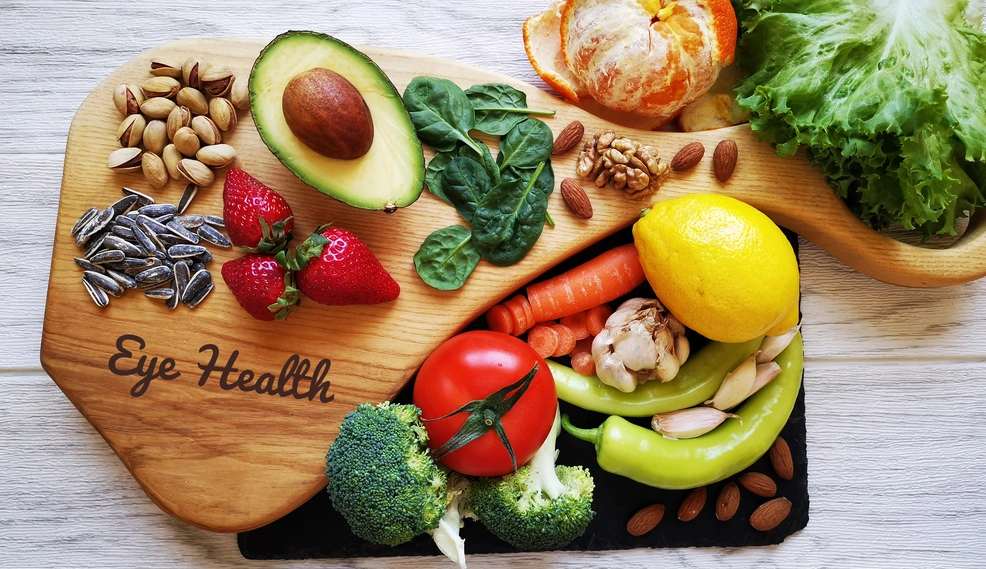
Make variety the practical goal
Include leafy vegetables, other colourful produce, beans, whole grains, and foods that suit your dietary needs. Build actual meals rather than buying seven separate supplement bottles. A lunch of beans, vegetables and whole-grain bread is a practical example, not a prescription for an eye condition.
Understand what AREDS2 is for
National Eye Institute explains that AREDS2 supplements can help some people with intermediate age-related macular degeneration, or certain circumstances involving late AMD in one eye. They are not a general method of preventing AMD, and a clinician should determine whether they fit your diagnosis.
Check before buying an eye supplement
Tell your clinician about medicines and other supplements. High-dose products can have risks and interactions. NEI notes that older AREDS formulations containing beta-carotene raise lung-cancer risk in current and former smokers; AREDS2 differs. A marketing phrase such as 'eye health' is not equivalent to trial evidence.
Use your eye appointment well
Bring a list of symptoms, their start date, medicines and family eye history. Ask what condition is being assessed, what follow-up is needed and whether a supplement is appropriate. New or sudden visual changes deserve medical advice rather than a dietary experiment.
A food shopping list and a supplement decision are different jobs
For ordinary meal planning, start with foods you already eat and the time you have to prepare them. Frozen vegetables, canned beans and familiar whole-grain foods may be easier to use regularly than a basket of unfamiliar ingredients bought because a headline calls them good for eyes.
For a diagnosed eye condition, start with the diagnosis and your clinician's instructions. NEI's AREDS2 guidance explains that the studied supplement formulation is not interchangeable with food or a standard multivitamin. A varied diet does not reproduce that treatment, and buying an “eye health” product does not establish that you need it.
Make the label part of the conversation
Photograph the ingredient panel of any supplement you are considering. Bring it with your medication list rather than relying on the front-of-pack name. Ask whether the formulation is appropriate for your diagnosis, whether its ingredients overlap with another product you take and when your eyes should be reviewed again.
A useful appointment note
Record what has changed in your vision, when you first noticed it and whether it affects reading, driving or other usual activities. Include what the clinician advised and the follow-up date. Keep dietary questions on that list, but do not use a meal change as a reason to postpone assessment of new symptoms.
Questions for your eye clinician
- What is my diagnosis and stage?
- Is a supplement appropriate?
- Does it interact with anything I take?
- When should changes in vision be reported?
Useful next guides
- Healthy Eating and Weight Change: Start with Sustainable Habits
- How to Plan a Week of Dinners Without Wasting Food
Sources
A LITTLE MORE FROM NANCY
Nancy
Find something good to cook, get a small garden started or pick up a useful idea for your home.
Meet Nancy