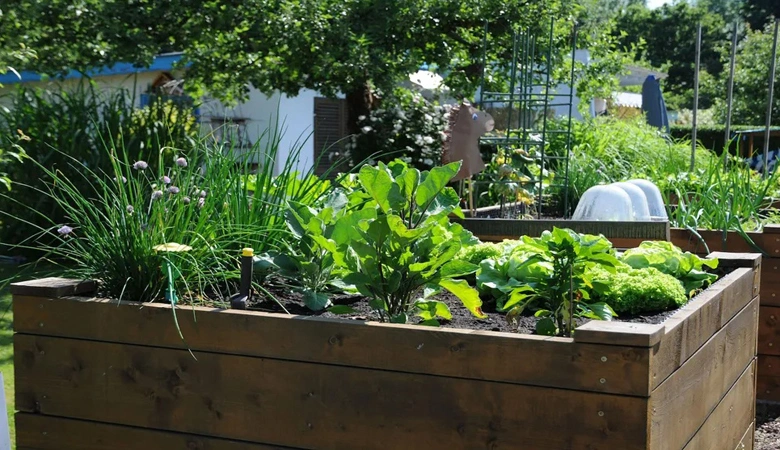
1. Match the plant to the patch
Choose one border or group of pots to assess first. Note when sunlight reaches it, where rainwater collects and whether nearby trees or buildings shelter the ground. Observe at different times rather than judging the whole garden from one bright afternoon.
Keep the plant name and mature size beside those notes. A shrub can fit when young and crowd a path later. A shaded bed can look empty because the plants chosen for it need stronger light. Replacing the same struggling plant without reviewing the spot repeats the original decision.
Make the next purchase specific: a plant for this amount of light, this soil and this available spread. If shade is the limiting factor, our shaded raised-bed guide shows how to run a small crop trial before filling the entire bed.
2. Check moisture before setting a schedule
A pot beside a warm wall and a rooted shrub in a border are different watering jobs. Check the growing medium and the plant's own guidance. A dry-looking surface does not describe every part of the root zone, and rainfall may not reach a sheltered pot.
The RHS watering guide advises against a fixed once-a-week routine: needs change with weather, soil, plant size and establishment. It recommends applying water to soil or compost above the roots. New plantings, seedlings and containers deserve their own checks.
Make a short route through the most dependent plants first. If a plant looks wilted, check conditions before adding more water automatically. Record what you found, including whether the pot drains and whether the plant recovers after the appropriate care. Get species-specific advice if the pattern continues.
3. Deal with weeds and soil as separate questions
Remove young weeds while you can work around your plants easily. Identify persistent regrowth so you know whether you are looking at new seedlings or roots returning. Avoid treating an unidentified plant just because it appears where you did not sow it.
Mulch can help conserve moisture and suppress weeds, but it needs correct placement. The RHS mulching guide advises applying it over moist, weeded soil and keeping it away from woody stems. Choose the material and depth to suit your plants, and leave space around the stems.
Before feeding a poorly growing plant, check its position, drainage and care. If the question is soil fertility, use local soil-testing advice and interpret the result for the plants you are growing. A bag of fertiliser does not tell you why water sits in one corner of a bed.
For suitable household and garden material, our compost-bin guide explains collection and troubleshooting. Making compost and deciding how much a particular bed needs are separate tasks.
4. Name the purpose before pruning
Write down what needs changing: a damaged branch, a plant outgrowing its space, a support that no longer holds the growth, or reduced flowering. Identify the plant before deciding when or how much to cut.
The RHS beginner's pruning guide groups shrubs by growth and flowering habits. Cutting at the wrong point in that cycle can remove the growth that carries flowers. Look up your plant rather than using one month as a rule for the whole garden.
Use suitable, clean tools for work you can reach safely. Leave large trees, unstable branches and anything near power lines to the appropriate professional. A weekly tidy-up is not a reason to begin an uncertain tree job.
5. Investigate a change before treating it
Walk the same route regularly and compare the same plants. Look at the whole plant before photographing one leaf. Include the surrounding bed or pot, the affected part and a close-up that shows the symptom clearly.
University of Minnesota Extension notes that not all plant damage comes from pests; moisture, weather and planting problems can look similar. Some pest damage is cosmetic and may not need treatment. Identification comes before buying a product.
| What you notice | Useful next check |
|---|---|
| One pot repeatedly struggles | Compare its drainage, position and care with the others. |
| Damage spreads between visits | Photograph the change and identify the cause. |
| A patch remains wet | Investigate the water source and drainage. |
| A shrub stops flowering | Review its identity, light and pruning history. |
These checks do not diagnose the problem. They give you better information for local advice. Keep one note with the plant name, date, recent care and next action. "Identify the new damage on the rose" is a useful task; "make the garden healthier" is too broad to finish.
More for your home and garden
- Ten Plant Nursery Shopping Mistakes to Avoid
- Vegetables in a Shaded Raised Bed: Choose Light-Tolerant Crops
- How to Start a Compost Bin: Browns, Greens and Troubleshooting
Sources and further reading
A LITTLE MORE FROM NANCY
Nancy
Find something good to cook, get a small garden started or pick up a useful idea for your home.
Meet Nancy