
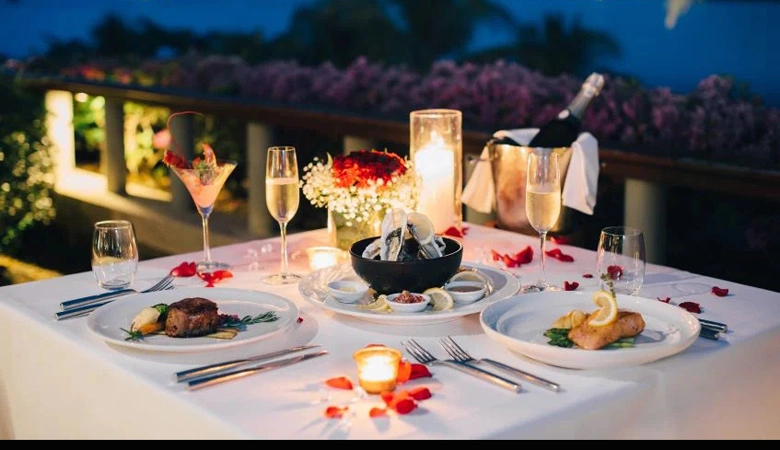
Try the table before you plan the food
Set out the chairs and walk past them with a tray. Notice steps, uneven ground, the width of the route and where you will put a hot dish down. Check the light available when guests arrive and leave.
Plan for the people you are inviting: comfortable seating, a usable route and a place indoors if needed. Decide which indoor space can hold the group before choosing the guest count. Check the forecast nearer the meal and set a point at which you will switch plans.
Choose a menu with one last-minute job
Pick one main dish, one easy side and a dessert prepared or bought ahead. A main that needs all your attention pairs better with a simple side than with another dish requiring immediate frying or assembly.
You could use a complete pasta recipe with a salad assembled near serving, or another combination that fits your kitchen. Confirm guests’ dietary needs before choosing. Keep the ingredient information for bought sauces and desserts, as well as your recipes.
Our rigatoni with peppers gives a main-dish method, while the tomato, fig and feta salad is an assembly option. Choose the pair only if the ingredients and timing suit your guests.
Make a short serving plan
| When | Job | Keep ready |
|---|---|---|
| Before cooking | Set seating, table and the route | Lighting, napkins, drinks and utensils |
| During preparation | Measure ingredients and organise serving dishes | Chilled food in suitable storage |
| Close to eating | Finish the main and assemble the side | A clear place for hot dishes |
| After the meal | Clear food and handle leftovers promptly | Suitable containers and refrigerator space |
Write the actual cooking steps beside this outline. If several dishes all need the same pan or oven shelf at once, simplify the menu while there is time to change it.
Bring food out when you need it
Keep chilled ingredients chilled until they are needed and separate raw food from ready-to-eat dishes. For a buffet-style serving, use smaller platters and bring out replacements rather than setting everything outside at the beginning.
USDA’s buffet guidance says to keep hot food at 140°F/60°C or above and cold food at 40°F/about 4°C or below. Perishable food left without that temperature control should be discarded after more than two hours, or one hour when the air is above 90°F/about 32°C.
Count the time spent preparing and serving the food, including the trip outside. Keep track of temperatures even on a cool evening, and follow the food-storage guidance where you live.
Remove the little trips back indoors
Put serving spoons with their dishes and choose a clear place for used plates. Set out water and other drinks where guests can reach them. Keep a spare cloth and the things you expect to need nearby without crowding the table.
Use lighting and other equipment rated for its intended setting, following the product instructions. Keep cables clear of the walking route and manage heat or open flames appropriately. If the outdoor setup makes these jobs difficult, choose a simpler setup or eat indoors.
Leave room to enjoy the meal
Before serving, check the practical essentials once: seating, food, utensils, weather plan and the route back to the kitchen. Then sit down when the meal allows. You do not need another decorative item to fill a clear patch of table.
Afterwards, note the one thing you would change: fewer dishes, a better place for drinks or an earlier switch indoors. Keep the menu and sequence if they worked. The next gathering can reuse a plan you already know.
Keep exploring
- Rigatoni Peperonata with Sweet Peppers
- Heirloom Tomato, Fig and Feta Salad
- Party Finger Food: Six Simple Options and a Serving Plan
Sources and further reading
A LITTLE MORE FROM NANCY
Nancy
Find something good to cook, get a small garden started or pick up a useful idea for your home.
Meet Nancy

